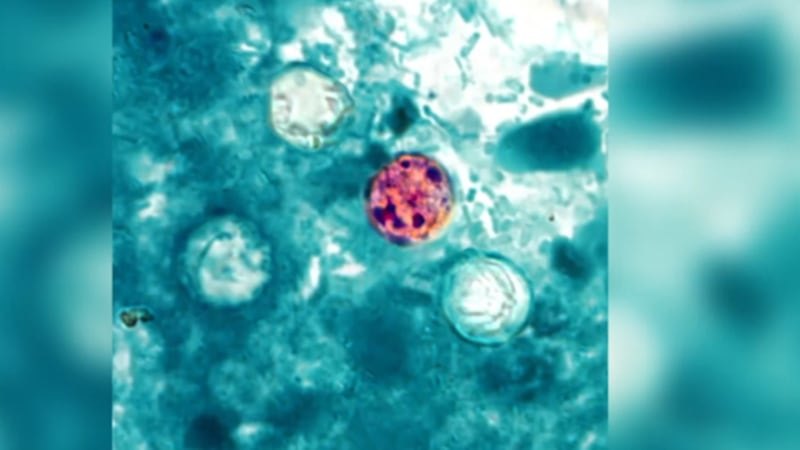
Mecklenburg County has the highest cyclosporiasis case count in the Charlotte region, with 49 confirmed infections from a parasite-borne intestinal illness whose source health officials have not yet identified.
The North Carolina Department of Health and Human Services reported 940 total cases statewide as of Tuesday, Aug. 25, according to WBTV. Mecklenburg's 49 cases dwarf neighboring counties: Union County has seven, Cabarrus County six and Davidson County five.
The outbreak appears to be slowing. Only 11 new cases were reported statewide in the week ending Aug. 25, and no new hospitalizations were added to the state's total of 32 since May.
No source confirmed, but herbs flagged
State health officials have not pinpointed a specific food source for North Carolina's cases. NC DHHS said the state's outbreak does not appear connected to the multistate Taco Bell-linked lettuce cluster. That outbreak was traced to Taylor Farms de Mexico.
Instead, the department said sickened North Carolinians ate parsley and cilantro more frequently than the general population, according to the Charlotte Observer. No proof has confirmed a direct link to those herbs.
NC DHHS said washing fresh produce may remove some of the parasite but does not guarantee full removal. Cooking foods to 165 degrees Fahrenheit kills cyclospora, but the parasite is most often found in ingredients served raw.
Symptoms and treatment
Cyclosporiasis is caused by the parasite Cyclospora cayetanensis. It does not spread person to person. People contract it by eating contaminated food or drinking contaminated water.
Symptoms can appear two days to two weeks after exposure, with a typical onset of about one week, and include watery diarrhea (sometimes explosive), stomach cramps, bloating, nausea, fatigue and weight loss. Without treatment, symptoms can last a month or longer and may come and go.
The standard treatment is the antibiotic trimethoprim-sulfamethoxazole, sold as Bactrim or Septra, according to Newsweek. People who are immunocompromised face higher risk of severe illness, according to CDC guidance cited by state health officials.
Dr. Sharon Nachman, chief of the Division of Pediatric Infectious Disease at Stony Brook Children's Hospital, told USA Today on Aug. 20: "If you're really thinking about keeping your family safe, it's not unreasonable to continue to wash your lettuce at this time while we watch the numbers go down."
National picture
The CDC reported 15,716 confirmed cyclospora infections across 47 states as of Aug. 18, making 2026 the worst year on record. Last year, 1,180 cases were reported between May and August. Two deaths and 828 hospitalizations have been reported nationally; both deaths occurred in Michigan and were linked to the Taylor Farms lettuce outbreak.
NC DHHS posts updated case counts every Tuesday. The next update is expected Tuesday, Sept. 1.
Anyone experiencing symptoms should contact a health care provider. Residents can report foodborne illness to the Mecklenburg County Health Department.