Mecklenburg County's taxable sales grew just 3.1% in the year ending in June, barely matching inflation and trailing every surrounding county, according to a Charlotte Ledger/WFAE analysis published Wednesday, Aug. 26.
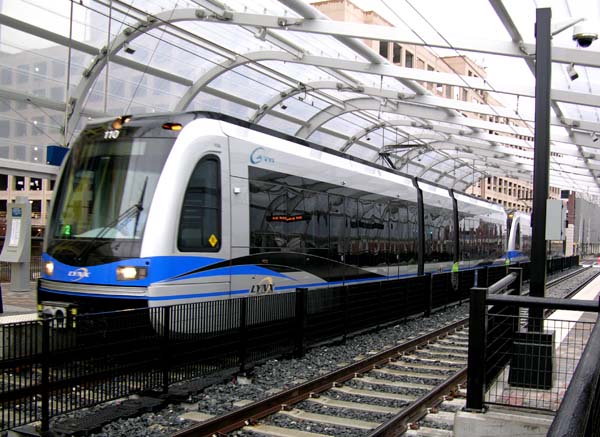
The sluggish growth raises questions about how much money the voter-approved 1-cent transportation sales tax will actually generate for light rail, buses and road projects planned for Ballantyne and other parts of the county.
That gap matters for Ballantyne.
Total taxable sales in Mecklenburg reached $37.13 billion over those 12 months, based on N.C. Department of Revenue data. The 3.1% increase fell below the statewide average of 4.7%.
The county projects its share of sales tax revenue for the fiscal year ending June 30 at roughly $414.3 million, about $561,000 less than the $414.8 million collected in fiscal year 2024-25. Sales tax is the county's second-largest revenue source.
County Chief Financial Officer David Boyd attributed much of the shortfall to nonprofit sales tax refunds that more than doubled year over year, jumping by more than $30 million in fiscal year 2026. Schools and hospital systems are among the entities that pay sales taxes and then apply for refunds. The county is seeking more details from the state about which nonprofits received the elevated refunds and why.
Setting refunds aside, Boyd said in the Aug. 26 report that underlying revenue "has been relatively stable and growing, just not as fast as it was in the past."
Budget projection under pressure
Mecklenburg's fiscal year 2027 budget assumes a $19 million increase in sales tax revenue, or 4.5% growth. That is one of the highest estimates among North Carolina's urban counties. Boyd acknowledged the figure "may be overly optimistic" given the latest data.
The concern extends beyond the general fund. Voters approved the 1-cent transportation sales tax on Nov. 4, 2025, and it took effect July 1. The tax was projected to generate between $19.4 billion and $25 billion over 30 years for road, bus, rail and pedestrian projects. Pre-vote campaign materials from the Charlotte Regional Business Alliance proposed microtransit expansion into Ballantyne, connecting the area with major bus and light rail stations.
If consumer spending stays flat, that 30-year revenue window shrinks. The Ledger/WFAE report noted that lower-than-expected spending could result in billions less for transit over time.
Economists point to multiple causes
Mike Walden, an economics professor at N.C. State University, cited falling consumer confidence. "There's just a general unsettling feeling in the economy," Walden told WFAE.
Other factors economists identified: high interest rates suppressing big-ticket purchases like cars and furniture, little new retail construction in Mecklenburg in recent years, and lower-income households not seeing wage gains comparable to wealthier residents.
Mark Vitner, an economist at Piedmont Crescent Capital, pointed to a geographic shift. Growth is now concentrated in outlying suburbs beyond the beltline across much of the South, he said.
Gaston, Guilford and Forsyth counties have also noted in their budgets that sales tax revenues fell short of projections in recent years.
What's next
The county has not announced a public meeting or deadline tied to the revenue data. The Ledger/WFAE series' second installment, examining what sluggish sales tax growth means specifically for transit funding, was scheduled for Friday, Aug. 28.