The Charlotte Area Transit System loses between $5 million and $6.5 million annually because riders aren't paying their fares, and only two Charlotte-Mecklenburg police officers cover the entire system, according to a state audit released Aug. 17.
The findings land as Charlotte plans rail expansion south. A full Blue Line extension to Ballantyne would cost an estimated $1.8 billion and remains unfunded; current plans extend only to Carolina Place Mall in Pineville.
North Carolina State Auditor Dave Boliek said about 60% of light rail riders and 35% of bus riders don't pay. In 2025, CATS issued 2,018 fare-evasion citations but collected just $550 in fines, down from 4,763 citations in 2023.
"The enforcement of those fares is almost nonexistent in the city right now," Boliek told Spectrum News on Aug. 20.
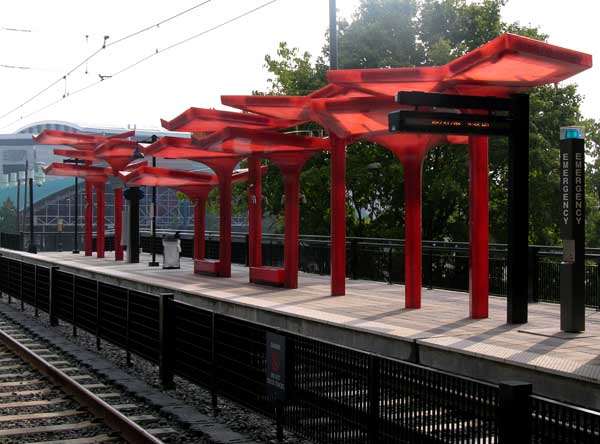
The audit's top recommendation: install gates or turnstiles at light rail stations to deter non-ticketed passengers. CATS Interim CEO Brent Cagle has pushed back, calling turnstiles "a revenue measure" rather than a security fix and noting the system wasn't designed for them.
Safety gaps and spending questions
Beyond fare collection, the audit flagged security shortfalls. At the time of rider Iryna Zarutska's death in August 2025, CATS' surveillance cameras were not connected to CMPD's Real Time Crime Center. That link was completed Oct. 10, 2025, and all 4,500 CATS cameras now feed into the center.
In February 2026, the Federal Transit Administration cited CATS for 18 findings of non-compliance and reported that crime against Charlotte transit passengers was three times the national average.
The audit also found CMPD is not actively enforcing bans. As of February 2026, 175 people had been banned from riding CATS, but enforcement of the exclusion list was lacking.
CATS had $2.2 million budgeted for safety and security equipment in fiscal year 2025 but spent only $470,242, leaving roughly $1.7 million unspent, according to Yahoo News reporting.
City says progress is underway
The city said in a statement that much of the report "has already been addressed or work is under way." It pointed to a security contract that grew from $5.8 million in fiscal year 2022 to $23.1 million in fiscal year 2027, with contracted staffing more than doubling from about 110 to 262 personnel. Off-duty officers have logged more than 46,000 patrol hours on the system.
Crime numbers have improved. Blue Line offenses fell about 69% in the first quarter of 2026 compared with the same period in 2025, and Part 1 offenses dropped 73% in the second quarter, the city said.
Charlotte City Council at-large representative Dimple Ajmera acknowledged the tension between data and rider experience, telling Spectrum News on Aug. 20: "Certainly, the data shows that crime has gone down on transit. There has been significant improvement, but perception matters."
What comes next
CATS plans to deploy more than 60 uniformed fare enforcement ambassadors in October through a $5 million-per-year contract with Kentucky-based vendor Block by Block. Governance of CATS shifted July 1 from the Metropolitan Transit Commission to the new 27-member Metropolitan Public Transportation Authority.
No District 7 council member, who represents the Ballantyne area, has commented publicly on the audit findings. MPTA safety committee vice chair David Longo said the board wants CATS to be "the safest system in the country," but the authority has not announced when it will next meet to discuss the audit's recommendations.