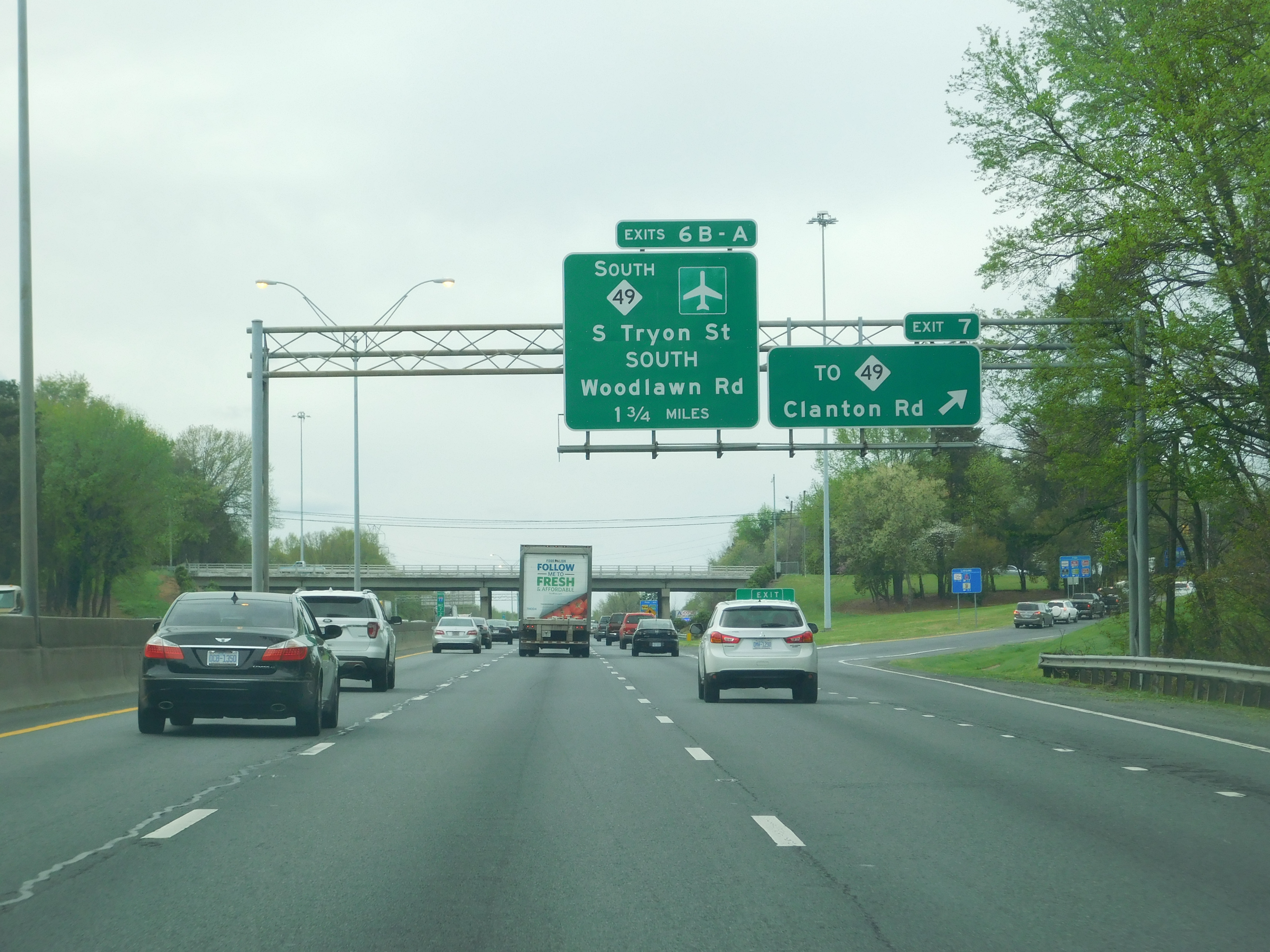
The Charlotte Regional Transportation Planning Organization votes Wednesday, Sept. 23, on the I-77 South toll lane project. The vote is the last procedural step before construction planning begins on the 11-mile corridor through Ballantyne to the South Carolina border.
The vote follows Charlotte City Council's 7-4 decision on Tuesday, Sept. 22, to reinstate support for the project, reversing a May 2026 vote that had rescinded it. Charlotte holds 31 of the CRTPO board's 74 weighted votes. Charlotte's 31 votes, combined with announced flips from Cornelius, Huntersville, Monroe and Davidson, would give the project a majority.
Mecklenburg County, which holds three weighted votes, is expected to vote no. Commission Chair Mark Jerrell told WFAE on Sept. 10 that none of his colleagues wanted to change their position.
Davidson Mayor Rusty Knox captured the mood among reluctant supporters. "It's a hard pill to swallow," Knox told WSOC-TV on Wednesday, Sept. 23. "I don't believe in this project."
What the $300M deal includes
North Carolina's transportation secretary was expected to sign a legally binding memorandum of agreement on Tuesday committing at least $300 million in community investments tied to the project, WCNC first reported. The breakdown:
- At least $150 million for structures to reconnect communities divided by the interstate
- At least $30 million to address food insecurity along the West Trade Street-Beatties Ford Road, West Boulevard and Statesville Avenue corridors
- $35 million for housing stability and small-business investments
- $15 million for environmental improvements
Council member Malcolm Graham, who switched his vote from "no" in May to "yes" on Tuesday, told QCity Metro the funds would be payable when a developer signs the contract. Graham said the money could support a "cap and stitch" project near West Trade Street and I-77, co-op grocery stores and potential investments in a civic center at Johnson C. Smith University.
Why votes flipped
The North Carolina General Assembly passed a provision in the state budget, signed by Gov. Josh Stein in July 2026, requiring municipalities that voted against the project to repay the N.C. Department of Transportation (NCDOT) for design costs. NCDOT put that penalty at $69.5 million. Graham said Charlotte did not have $70 million available and did not want to raise property taxes or risk the city's AAA bond rating.
Council member Joi Mayo, who also switched to "yes," pointed to the enforceable nature of the new agreement.
The Charlotte Observer reported the project would cost between $3.2 billion and $4 billion through a public-private partnership, with four companies shortlisted for the contract. The project is at roughly 10% to 15% design completion, according to Graham.
Opposition persists
Not everyone agreed.
Robert Dawkins, an organizer with Action NC, called the $300 million insufficient. Of about 50 public speakers at Tuesday's council meeting, roughly 36 opposed the project.
Mecklenburg County Commissioner Leigh Altman said at an August CRTPO meeting that the repayment requirement is unconstitutional and that community response has been "overwhelmingly negative," QC News reported.
The project would add two toll lanes in each direction along I-77 from uptown Charlotte through Ballantyne. Supporters say it would rebuild 17 of 22 bridges along the corridor and add streetlights and sidewalks. NCDOT's plans include removing about 29 homes in the Wilmore neighborhood and Wilmore Park.
The CRTPO vote is scheduled for Wednesday evening, Sept. 23. The outcome had not been announced as of publication.