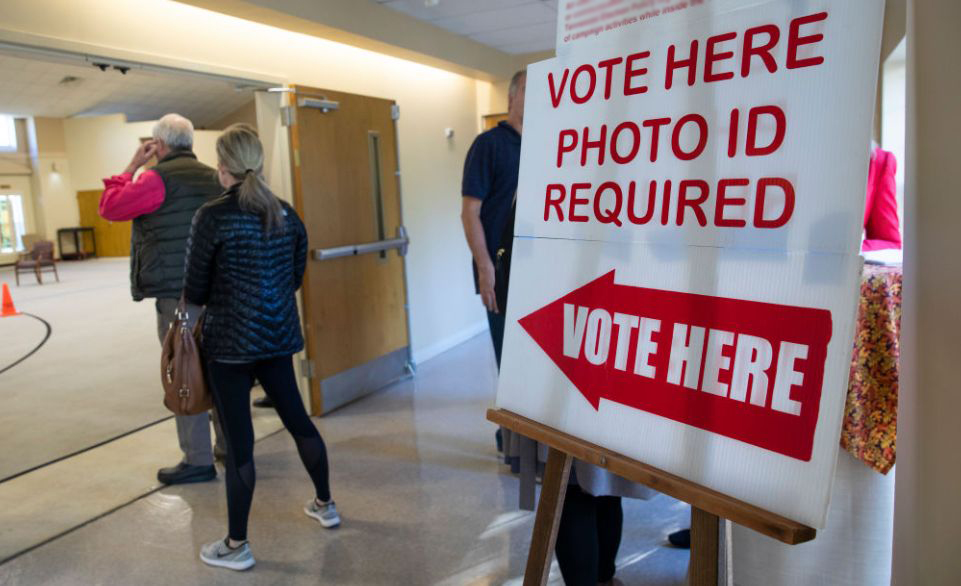
North Carolina voters approved the constitutional photo-ID amendment in the Nov. 3 election, extending the Constitution’s identification requirement to all voting methods, including absentee mail ballots.
Unofficial statewide results from the N.C. State Board of Elections, checked Nov. 4, showed 2,463,276 votes for the amendment (59.60%) and 1,669,764 against (40.40%), with all 2,626 precincts reporting. The results remain unofficial pending certification.
The amendment takes effect upon certification, according to the legislation described below. State law already requires photo ID for absentee mail voting, with exceptions; the vote places the broader requirement in the Constitution.
The ballot asked voters to choose "for" or "against" a "constitutional amendment to require all voters, not just those presenting to vote in person, to present photo identification before voting." That language comes from Senate Bill 921, ratified by the General Assembly on Dec. 13, 2024.
What the amendment changes
North Carolina's Constitution already requires photo ID for in-person voting. Voters approved that provision in 2018, according to WRAL.
State law also already requires absentee-by-mail voters to include a photocopy of an acceptable photo ID with their ballot or complete an ID Exception Form, according to the State Board of Elections. The amendment adds that mail-ballot ID requirement to the state Constitution.
The practical effect did not change how Mecklenburg County voters cast ballots on Nov. 3. The League of Women Voters of North Carolina noted that the amendment places into the Constitution a requirement already established in state law.
The difference is durability. Passing a law requires a simple legislative majority, or a supermajority to override a governor's veto. Amending the Constitution requires a three-fifths vote in both chambers and approval by at least half of voters, as WUNC reported.
Supporters and opponents
Rep. Mike Schietzelt, R-Wake, told WUNC that the measure increases security as mail-in voting has grown since the COVID-19 pandemic. Supporters argue the same constitutional standard should apply to every voter and that placing the rule in the Constitution makes it more permanent.
Opponents raise a different concern. The amendment says the General Assembly "may include exceptions" but does not place the current exceptions themselves into the Constitution. The League of Women Voters warned that future legislatures could narrow those protections while the constitutional ID mandate remained.
Rep. Pricey Harrison, D-Guilford, told WUNC the amendment could create an unnecessary hurdle. She said the Constitution "should be protected and not filled in with get-out-the vote efforts … and it's difficult to undo it once it's in the constitution."
Current ID exceptions
Under existing state law, any voter unable to show photo ID may fill out an ID Exception Form and still vote, according to the State Board of Elections. Permitted reasons include lack of transportation, disability or illness, a lost or stolen ID, a religious objection to being photographed and other circumstances. In-person voters who use the exception cast a provisional ballot. Mail-in voters who cannot attach a photo ID copy must include a driver's license number or the last four digits of their Social Security number on the form.