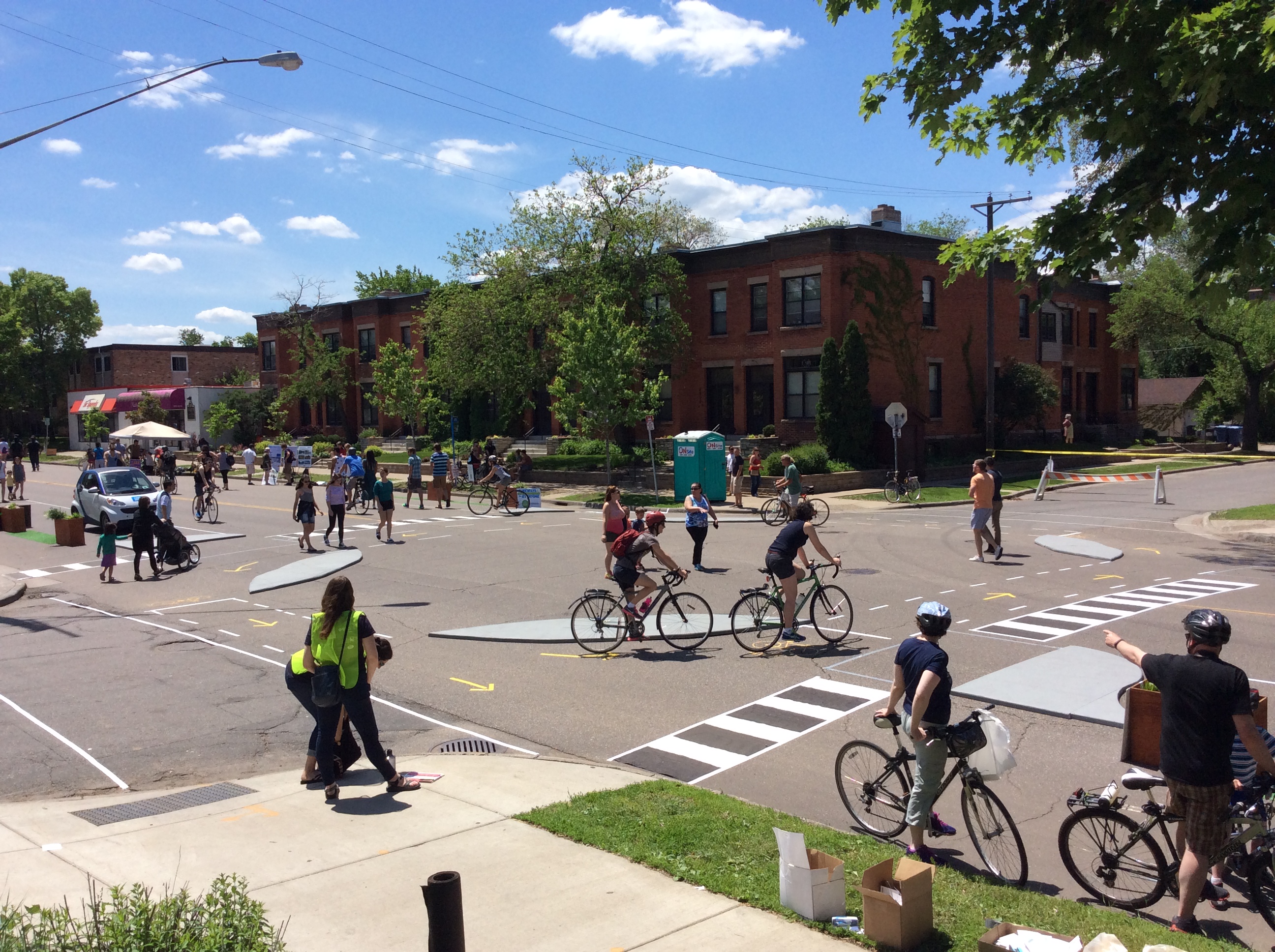
Hundreds of cyclists pedaled through Charlotte on Sunday, Oct. 18, demanding safer streets for riders who live outside the city's urban core.
Biketoberfest, an annual ride organized by Sustain Charlotte, drew participants who said suburban neighborhoods lack the connected bike lanes needed to make cycling a realistic option. That complaint resonates in Ballantyne, where suburban corridors were built to move cars, not bikes.
Cheryl Reid, a Biketoberfest participant and Tri It For Life member, told WCNC that most of her group lives outside the city in suburban areas with few bike lanes. "Most of us just live outside of the city … and we don't have as many of the bike lanes for us to ride in," Reid said.
Reid's group included a mix of first-, second- and third-year Biketoberfest participants, WCNC reported. They said that even as experienced cyclists, sharing the road still carries risk.
Sustain Charlotte Design Specialist Eric Zaverl said the event started over a decade ago to get people touring the city by bike. He told WCNC the ride exposes gaps in the network firsthand and "gets them to understand what is missing."
Crash data shows the risk
The ride comes as Charlotte's own safety numbers paint a mixed picture. Fatal crashes fell 16.7% and serious injury crashes dropped 27.5% compared to the prior fiscal year, according to the city's Vision Zero Annual Report, as analyzed by Sustain Charlotte. But fiscal year 2026 still recorded 65 fatal crashes and 74 serious injury crashes citywide.
People walking and biking were involved in just 1.2% of all crashes yet accounted for 37% of fatal and serious injuries. That was the highest share in five years, up from 28% the prior year, according to the report.
About 14% of pedestrian crashes and 9.4% of bicycle crashes resulted in a fatality or serious injury, compared with 0.3% of crashes involving only motor vehicles.
Speeding and improper vehicle operation together contributed to 62% of fatal and serious injury crashes, the report found.
Bond vote on Nov. 3
Charlotte voters will decide Nov. 3 on a $280 million transportation bond package that includes $10 million for the bike network, $50 million for sidewalks and $22 million for Vision Zero safety improvements, Axios Charlotte reported. Vision Zero (the city's initiative to eliminate traffic deaths) would fund new pedestrian crossings, upgraded traffic signals and new street lighting.
During fiscal year 2026, the Charlotte Department of Transportation (CDOT) added more than 10 miles of bicycle facilities and nearly 17 miles of sidewalk, lowered speed limits on 83 streets and installed 22 new traffic signals, according to Sustain Charlotte's analysis.
Sustain Charlotte co-chairs the city's Vision Zero Task Force and said the city needs to accelerate safety improvements on the most dangerous streets. The Nov. 3 bond vote will determine whether $10 million in new bike-network funding moves forward.